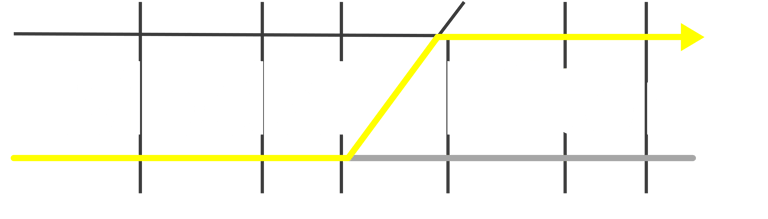
II. Travel Behavior
Active Transportation:
Walk/Roll
Cycle
Mass Transit:
Bus
Rail
Car
Freight*
Places













Mode Types:
Route Design
Direct Route
Most Competitive travel time and distance
Most preferred mode
Reassembles of US Road networks


Indirect Route
Least competitive travel distance
Longest travel time
Least preferred mode
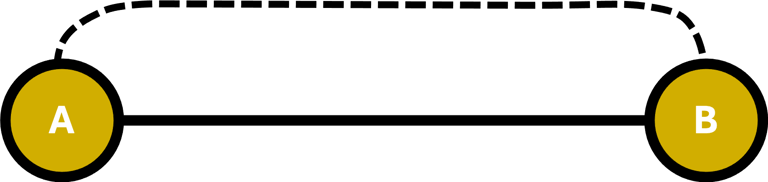

Competing Modes
When other mode types have same routes to a place, people will rationalize the most fast and convenient way to travel
Other reasons why people choose a mode: Safety, affordability, accessibility etc.
In most populations that can afford to own a car, the car is the most competitive choice when factoring for time and cost
Other mode types are typically slow and difficult to compete against the car
Cycling is slower and requires more effort than sitting in a car
Transit's travel time is typically slower due to dwell times and transfers, as well as first-last mile connections
Transportation behavior is a challenging topic to explain. It's much easier to default to an answer such as "too many multi-faceted variables are at play" and obstruct simplicity
However, explaining network design and connectivity will hopefully make it a lot more easier to understand.
How Does It Apply To Congestion?
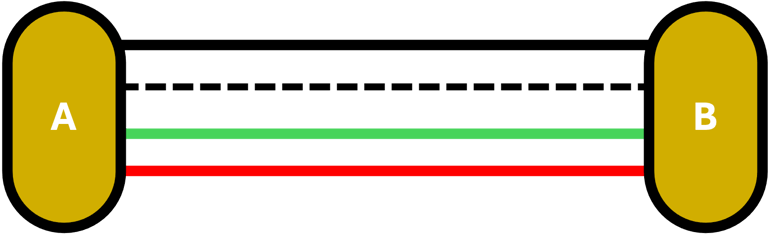
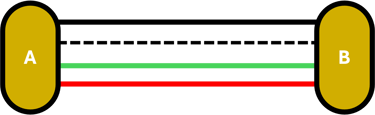
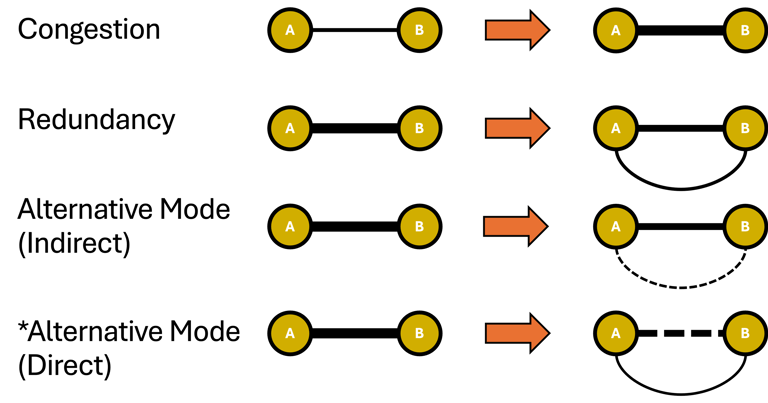
When there's a single transportation facility, in this example a road capacity for cars is constrained by an increase of traffic volume and a decrease in its efficiency.
Why this works?


Alternatives routes can help alleviate congestion, but also create unwanted spillover effects into other neighborhoods.
Creating alternative facilities for other mode types can also alleviate some congestion, but not completely.


There are many reasons how a person's travel behavior is influenced. However, from a network design perspective, a person's rationalization is simply by what is most direct.
Within a wealthy population where most households can afford a car, where time and cost are large factors in travel behavior, the car is often the most competitive mode type.
There is an opportunity to solve congestion. If direct travel rationalizes travel behavior, in this case for the car, then reprioritizing for a different mode type over the car should have the same effect at helping a population resulting in mode shift.
Transportation Network Design Types
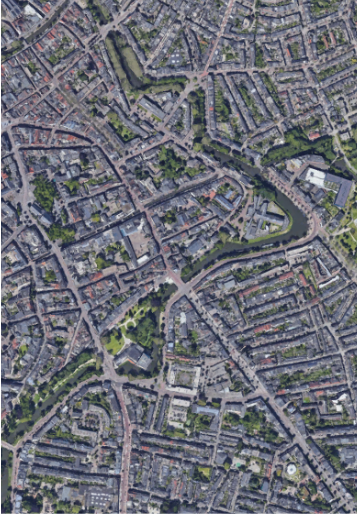
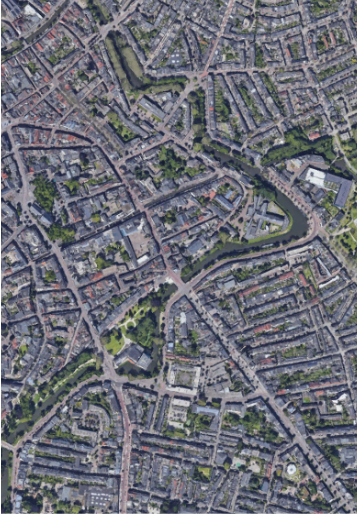
Grid System
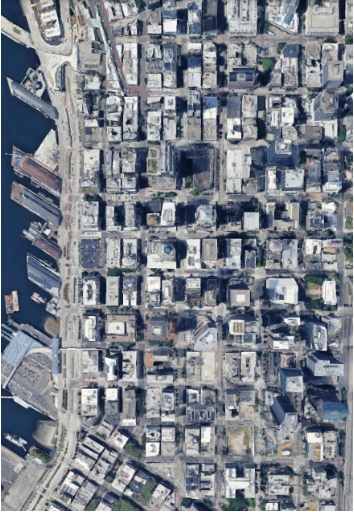
Typically found in historic city centers that predate the automobile.
This design offers the highest level network connectivity and flexibility during traffic. However, it struggles to manage traffic congestion and creates safety concerns due to conflict points with other mode types.
After the automobile, these streets created corridors for various thoroughfares. Combined with previously discussed travel behavior, it's no wonder why people will often choose to drive and shortcut through neighborhoods to achieve faster travel times.
Consequently, this also trades off safety and convenience of other road users and compels them to participate in driving even more.
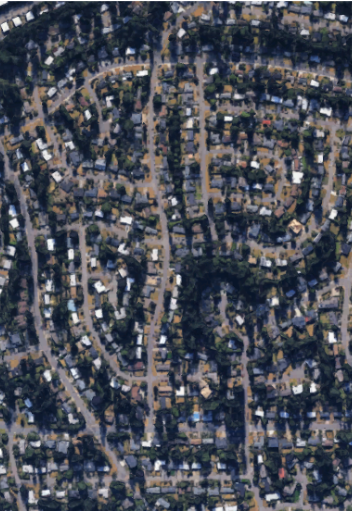
Curvilinear
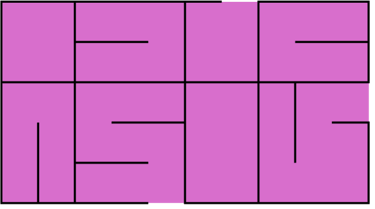
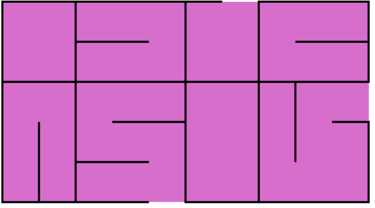
Often found in suburban cul-de-sac neighborhoods.
Capable at restricting automobile thoroughfare in residential neighborhoods; thus, being the safest design for other road users to mix in streets. However, it's also the worse design for connectivity level and inefficient at handling traffic volumes on major roads during peak hours.
Combined with sprawling land-use, the automobile out competes all other mode types for most, if not all, trip journeys.
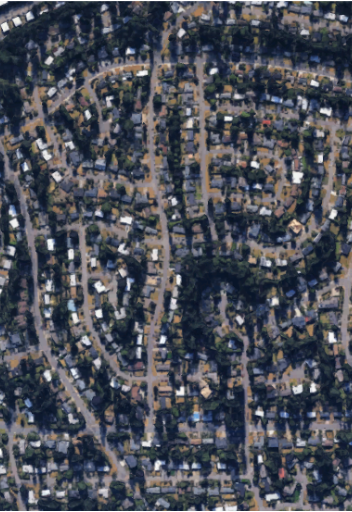
Fused
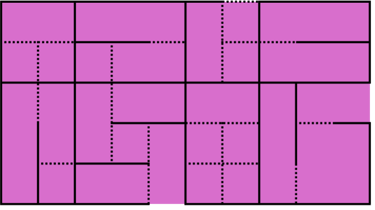
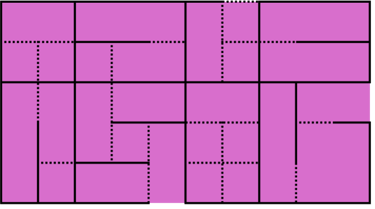
A hybrid sharing elements from both grid and curvilinear systems.
Depending on road facility design, some mode types trade their connectivity levels for others, such as pedestrian or cycle paths provide shortcuts, and streets have restricted thoroughfares for automobiles.
The trade-off has compounding effects that increase mode split as well as traffic safety.
Commonly found in European cities, but more robust in Dutch places. The Dutch road network is the result of this system design from transportation safety policies brought by Sustainable Safety and its spatial relationship to land-use policy.
Grid System
Applying Route Congestion Onto Network Design
Redundancy
Alternative (Indirect)
Alternative (Direct)
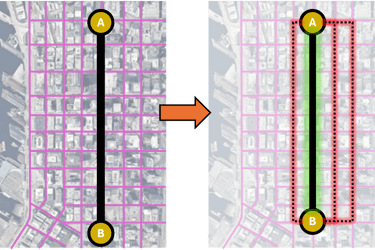
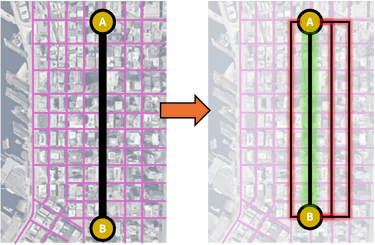
Traffic may use alternative corridors (in red) to avoid congestion in the direct route (in green).
Unfortunately this also causes increase in traffic volumes in other blocks and neighborhoods.
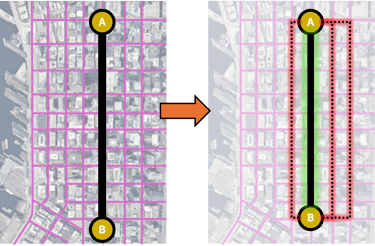
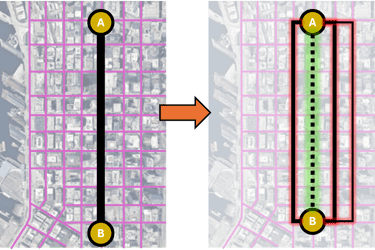
Providing alternative mode facilities (in red) may offer slight benefits from relieving congestion (in green). However, it's not enough to create mode shift to outcompete a car mode type direct travel.
The cost to build alternative facilities may not be a worthy investment and instead an increase in operation cost and maintenance over time.
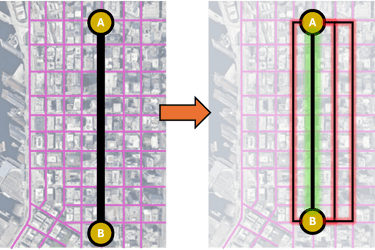
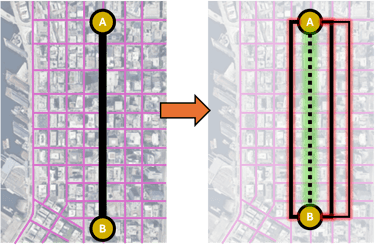
Direct route has been reprioritize exclusively for alternative mode type (this is good). However, since alternative corridors are spatially similar, the effect of spillover traffic is in effect (this is bad).
This is a step in the right direction at achieving mode shift and relieving congestion, but further intervention is needed to resolve the negative effects of spillover.
Curvilinear
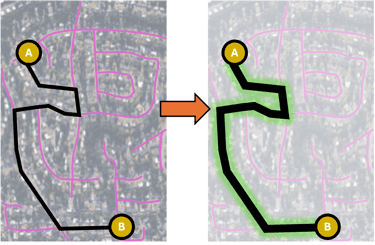
Redundancy
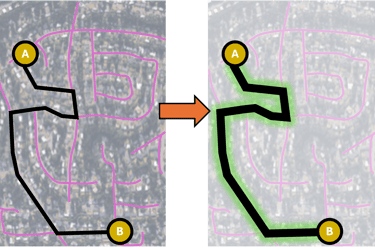
Without alternative road facilities, road capacity would be constrained due to increase in traffic volume.
These places don't typically have issues with capacity constraints due to low density land-use such as residential subdivisions.
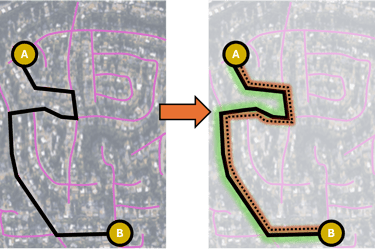
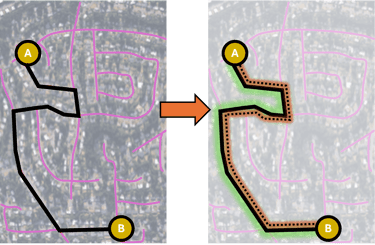
Alternative (Indirect/Direct)
Fused
Redundancy
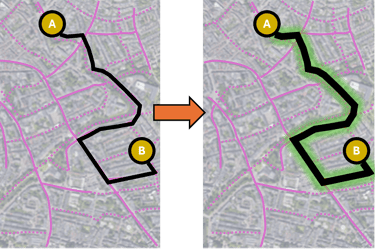
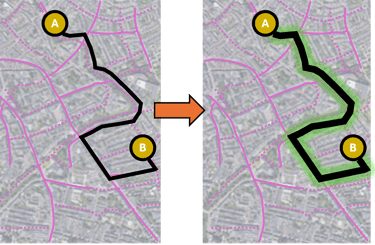
Redundancy in fused networks are minimal unlike grid networks. Assuming most people choose to drive within this network would then experience high levels of congestion along road facilities due to lack of redundancy.
Alternative (Indirect/Direct)
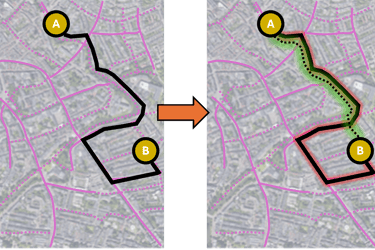
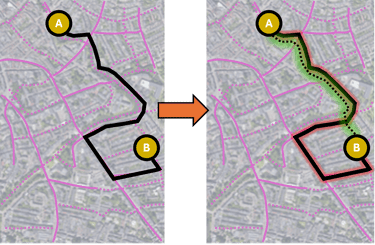
However, if alternative facilities are spatially designed where their routes are far more direct than circuitous driving, then congestion would not occur. Instead, mode shift towards alternative mode type would take place.
Since there are no ways to create alternative transportation facilities, designing for indirect/redirect routes is impossible.
Promoting alternative mode types unfortunately will continue to be challenged by the convenience of the car.
There might be some opportunities for creative problem solving such as back neighborhood trails and easements or land-use for commercial shopping within proximity.
Last update: 06.19.26